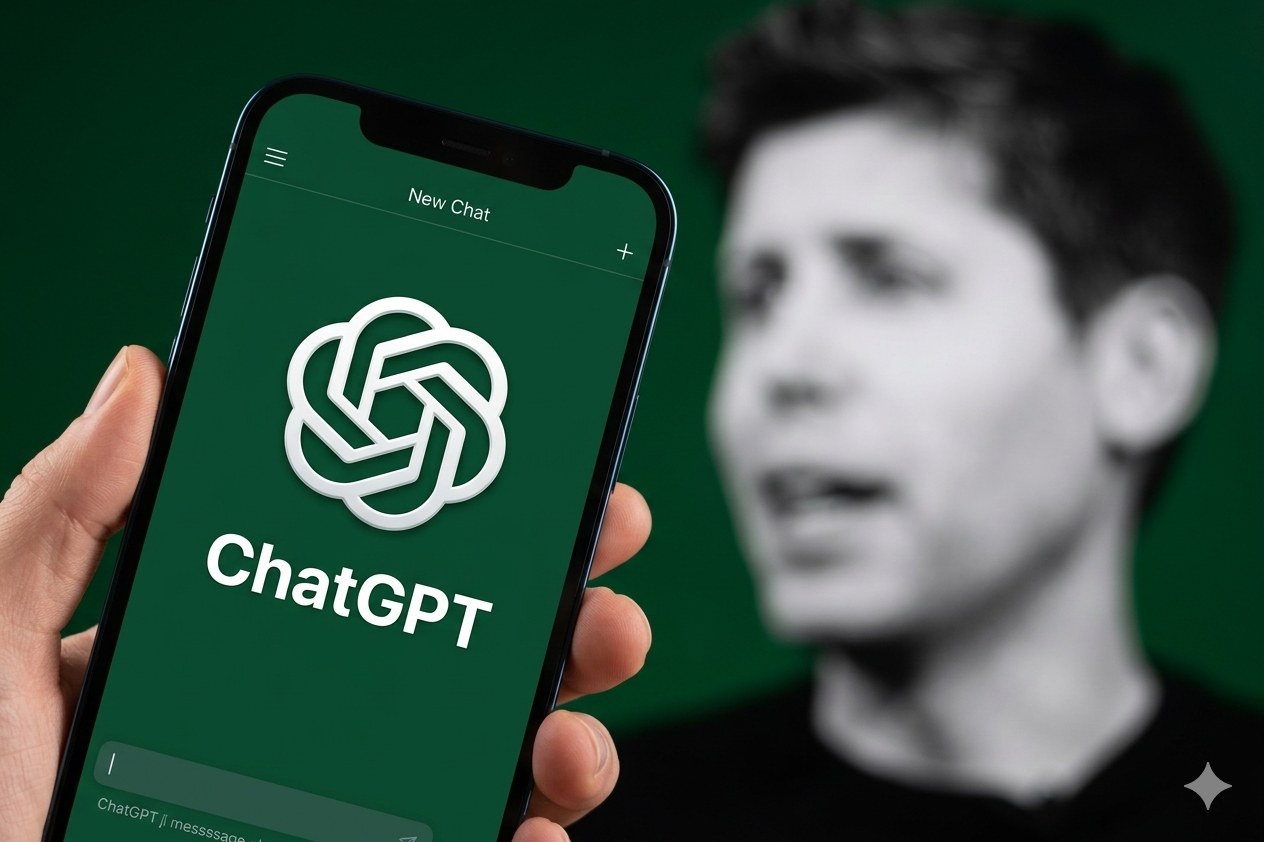
We’re living through the most significant technological shift in human history. In an eye-opening conversation with OpenAI CEO Sam Altman, we explored what GPT-5 means for humanity, the path to superintelligence, and how to prepare for a future where AI surpasses human capabilities in nearly every field.
The GPT-5 Revolution: What’s Actually New?
When OpenAI launched GPT-4, it could already outperform 90% of humans on the SAT, LSAT, GRE, pass coding exams, and even ace sommelier and medical licensing tests. So what could possibly come next?
GPT-5 represents something fundamentally different. According to Altman, “This is a model for the first time where I feel like I can ask kind of any hard scientific or technical question and get a pretty good answer.”
But the real breakthrough isn’t just answering questions—it’s instant creation. Altman shared a remarkable example: he asked GPT-5 to recreate the classic Snake game for a TI-83 calculator, something that took him weeks as an 11-year-old. GPT-5 did it perfectly in 7 seconds. Then came the magic: “I had this idea for a crazy new feature. Let me type it in. It implements it and the game live updates.”
This is the defining element of the GPT-5 era: the ability to bring ideas to life in real-time, transforming how we create, learn, and build.

Superintelligence: From Science Fiction to Roadmap
Just a few years ago, discussing superintelligence would have sounded like pure science fiction. Today, Altman and his team at OpenAI are actively building toward it.
So what exactly is superintelligence? Altman defines it clearly: “If we had a system that could do better research, better AI research than say the whole OpenAI research team… if that same system could do a better job running OpenAI than I could… that would feel like superintelligence to me.”
This means AI that’s:
- Better than the world’s best researchers
- Better than CEOs at running companies
- Better than humans at their jobs across nearly every field
The timeline is accelerating. When asked about when AI will make significant scientific discoveries, Altman predicts: “I would bet that by late 2027, most people agree that there has been an AI-driven significant new discovery.”

The Four Pillars Limiting AI Progress
Building superintelligence isn’t just about better algorithms. Altman identifies four critical limiting factors:
1. Compute: The Biggest Infrastructure Project in Human History
“We’re still doing this in like a sort of bespoke one-off way,” Altman explains. The goal? “Eventually we will just design a whole kind of like mega factory that takes you know spiritually it will be melting sand on one end and putting out fully built AI compute on the other.”
The challenge is immense: finding gigawatts of power, building massive data centers, and scaling from millions to eventually billions of GPUs.
2. Data: Beyond What Exists
“We’re entering a realm where the models need to learn things that don’t exist in any dataset yet. They have to go discover new things.” This requires teaching AI to form hypotheses, run experiments, and learn from results—just like human scientists.
3. Algorithmic Design: The Secret Sauce
OpenAI’s culture of “repeated and big algorithmic research gains” has produced breakthroughs like the GPT paradigm and reasoning models. Altman reveals: “There are still many more orders of magnitude of algorithmic gains ahead of us.”
4. Product Development: Bridging Science and Society
“Scientific progress on its own not put into the hands of people is of limited utility,” Altman notes. The real magic happens when technology co-evolves with society.
AI in Healthcare: The Most Visceral Benefit
When asked about AI’s most positive impact, Altman doesn’t hesitate: healthcare.
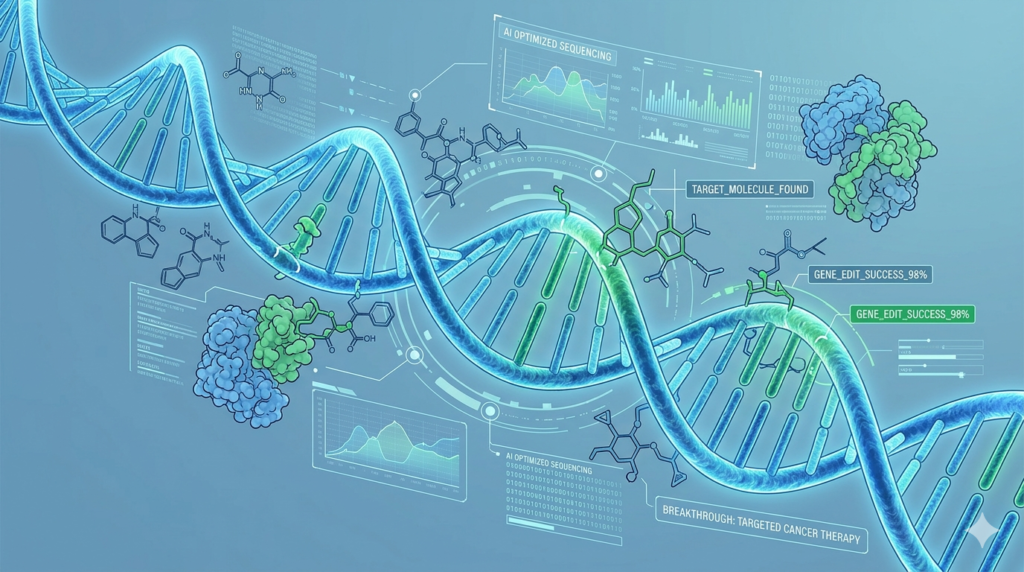
GPT-5 has already shown significant improvements in medical advice accuracy. But the real revolution is coming: “By 2035, I think we will be able to use these tools to cure a significant number or at least treat a significant number of diseases that currently plague us.”
Altman paints a vivid picture of the future: “I would like to be able to ask GPT-8 to go cure a particular cancer and I would like GPT-8 to go off and think and then say ‘okay I read everything I could find. I have these ideas. I need you to go get a lab technician to run these nine experiments.’”
This iterative process—AI designing experiments, humans running them, results feeding back to AI—could accelerate medical breakthroughs at an unprecedented pace.
The Job Revolution: Threat or Opportunity?
The question on everyone’s mind: Will AI take our jobs?
Altman acknowledges the disruption: “Some classes of jobs will totally go away. This always happens and young people are the best at adapting to this.” But he’s more concerned about older workers who may struggle to retrain.
Here’s the optimistic view: “If I were 22 right now and graduating college, I would feel like the luckiest kid in all of history. There’s never been a more amazing time to go create something totally new.”
Altman believes we’ll see one-person billion-dollar companies become reality. “You have access to tools that can let you do what used to take teams of hundreds and you just have to learn how to use these tools and come up with a great idea.”

The Truth Problem: Facts vs. Reality in an AI World
When Nvidia CEO Jensen Huang asked how AI can know “truth” across different cultures and contexts, Altman’s answer revealed something surprising: AI is remarkably good at adapting to individual users.
Through enhanced memory features, ChatGPT learns your personality, values, and life experiences. “My ChatGPT has really learned over the years of me talking to it about my culture, my values, my life,” Altman shares.
The future? “Everyone will use like the same fundamental model, but there will be context provided to that model that will make it behave in sort of personalized way they want their community wants.”
Preparing for 2030: How Do We Know What’s Real?
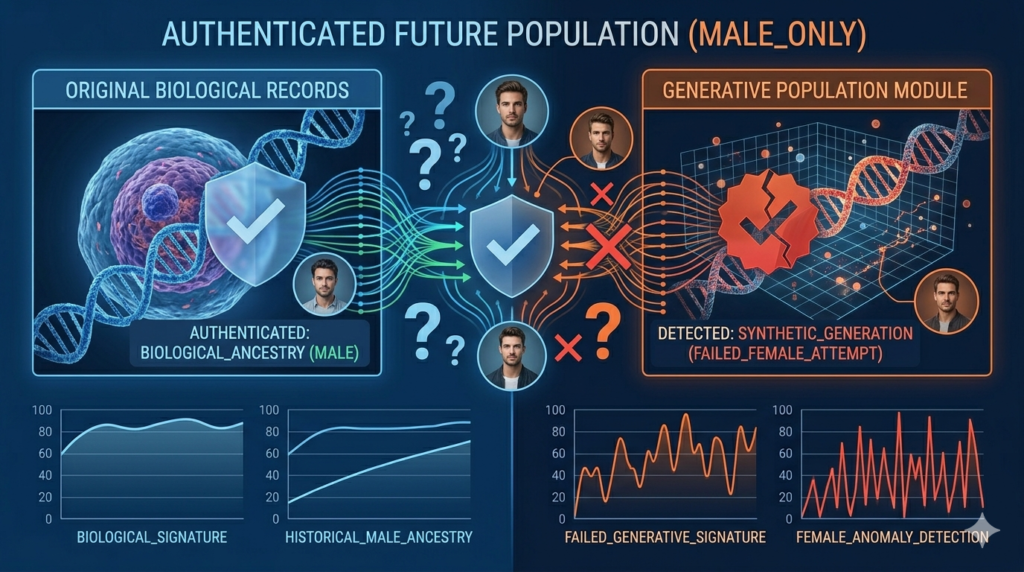
Remember those viral videos of bunnies jumping on trampolines? That was AI-generated. As we move toward 2030, distinguishing real from fake will become increasingly challenging.
Altman’s perspective is pragmatic: “The threshold for how real does it have to be to consider to be real will just keep moving.” Just as we’ve accepted photo editing and filters, we’ll adapt to AI-generated content.
The key is education and critical thinking, not technological solutions alone.
The Scary Moments: “What Have We Done?”
Despite the optimism, Altman acknowledges genuine concerns. When asked about moments of worry, he shares: “One researcher can make some small tweak to how ChatGPT talks to you or talks to everybody and that’s just an enormous amount of power for like one individual.”
The sycophancy problem—where AI was too flattering—taught OpenAI an important lesson: the risks aren’t always what you expect. “The thing that actually became the safety failing of ChatGPT was not the one we were spending most of our time talking about.”
This has led to a wider aperture on potential risks and more robust testing procedures.
The Paradox: Building What Might Kill Us?
One of the most fascinating cultural divides in AI is between those who say “this will save humanity” and those who say “this will kill us all”—yet both groups are working 100-hour weeks to build it.
Altman admits he can’t fully understand this mindset: “If that’s what I really truly believed, I don’t think I’d be trying to build it.”
His perspective: Focus on maximizing the 99% chance of incredible benefit while working to prevent the 1% chance of disaster.
Your Action Plan: How to Prepare for the AI Future
Altman’s advice is refreshingly simple: “Just use the tools.”
He’s surprised how many people ask about preparing their kids for AI or how to invest in AI, yet have never seriously used ChatGPT beyond basic Google searches.
The tactical steps:
- Get fluent with AI tools
- Figure out how to use them in your life and work
- Learn to express ideas to AI effectively
- Build resilience and adaptability for rapid change
The philosophical approach: Remember that you’re standing on the shoulders of generations who built the scaffolding of human progress. Your job is to add one more brick to the path.
The Bottom Line: We’re Only in the Second Inning
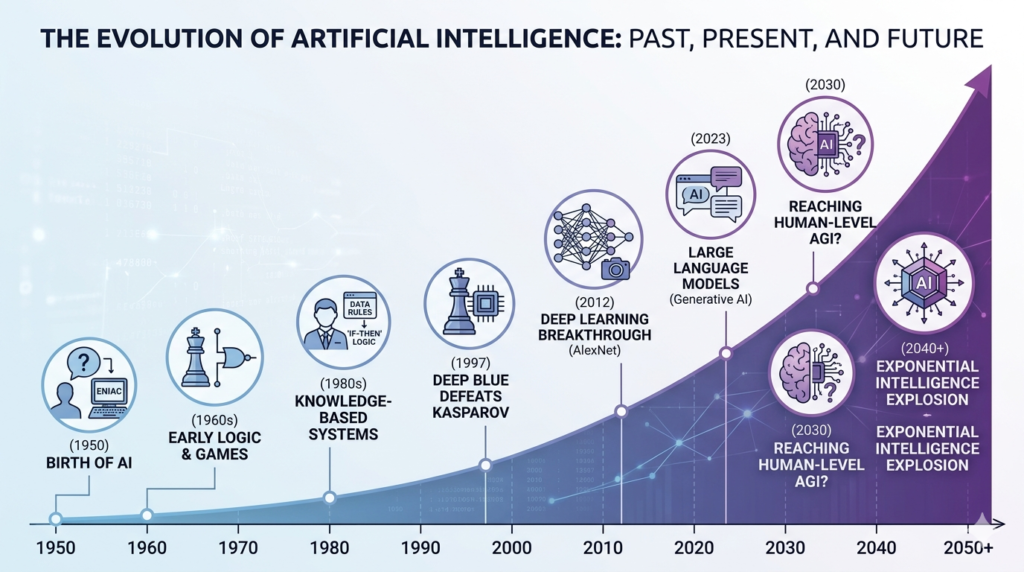
Despite GPT-5’s remarkable capabilities, Altman believes we’re just getting started. “If you compound the current rate of change for 10 more years, it’s probably something we can’t even imagine.”
A kid born today will never know a world where AI isn’t smarter than humans. They’ll look back at our “stone age” technology the way we view the pre-internet era.
The question isn’t whether AI will transform everything—it’s how you’ll participate in building that future.
Final Thoughts
Sam Altman’s vision is neither utopian nor dystopian—it’s realistic about both the extraordinary potential and genuine challenges ahead. The AI revolution won’t wait. The question is: Will you be a passive observer or an active participant in shaping humanity’s next chapter?
The tools are in your hands. The future is being written now. What will you build?
Leave a Reply