
The AI landscape just experienced its “DeepSeek moment” all over again. Kimi K2.5 has been released, and it’s not just another incremental update—it’s a paradigm shift that might make it the best AI model in the world, period. This groundbreaking model doesn’t just compete with closed-source giants like Claude Opus 4.5; it beats them on multiple benchmarks while being completely open-source and 8-10 times cheaper.
What Makes Kimi K2.5 Different?
Kimi K2.5 represents a quantum leap in AI capabilities. Unlike its predecessor Kimi K2, which was text-only, K2.5 is natively multimodal from the ground up. This means it can seamlessly process and understand images, videos, audio, and documents—not just text. But the real game-changer is its revolutionary Agent Swarm feature, which allows it to spawn and coordinate up to 100 different sub-agents working in parallel.
The Moonshot AI Story
Kimi K2.5 was developed by Moonshot AI, a Chinese AI research laboratory that’s quickly becoming a major player in the global AI race. Think of Moonshot AI as China’s answer to OpenAI or Anthropic. The company was founded by Yang Zhilin, an impressive researcher who previously worked at Google Brain, earned his PhD from Carnegie Mellon, and co-authored several key transformer papers that form the foundation of modern AI.

Moonshot AI isn’t just another research lab—it’s backed by some of the biggest names in Chinese tech, including Alibaba and Tencent. The company has raised over $2 billion and is currently valued at over $4 billion, though industry experts predict this number could double soon given the breakthrough performance of Kimi K2.5.
The Agent Swarm Revolution
The most significant feature of Kimi K2.5 is undoubtedly its built-in Agent Swarm capability. This isn’t just a fancy marketing term or a simple prompting trick—it’s a fundamental architectural innovation that changes how AI handles complex tasks.
How Agent Swarm Works
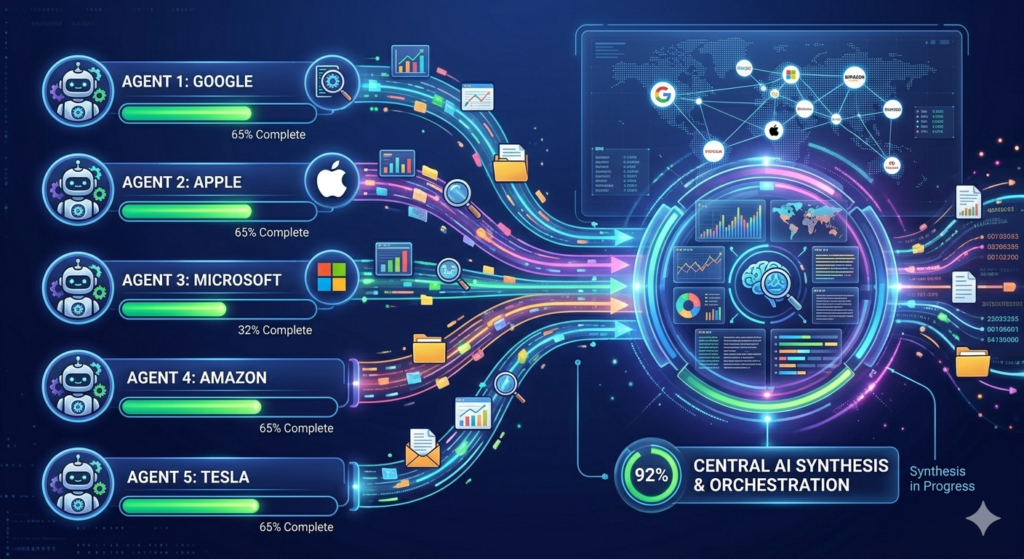
When you give Kimi K2.5 a complex task, the main “orchestrator” agent analyzes the request and automatically decides how many sub-agents to create, what roles they should have, and how to distribute the work. Unlike traditional AI systems that process tasks step-by-step, Kimi K2.5 launches these agents to work in parallel.
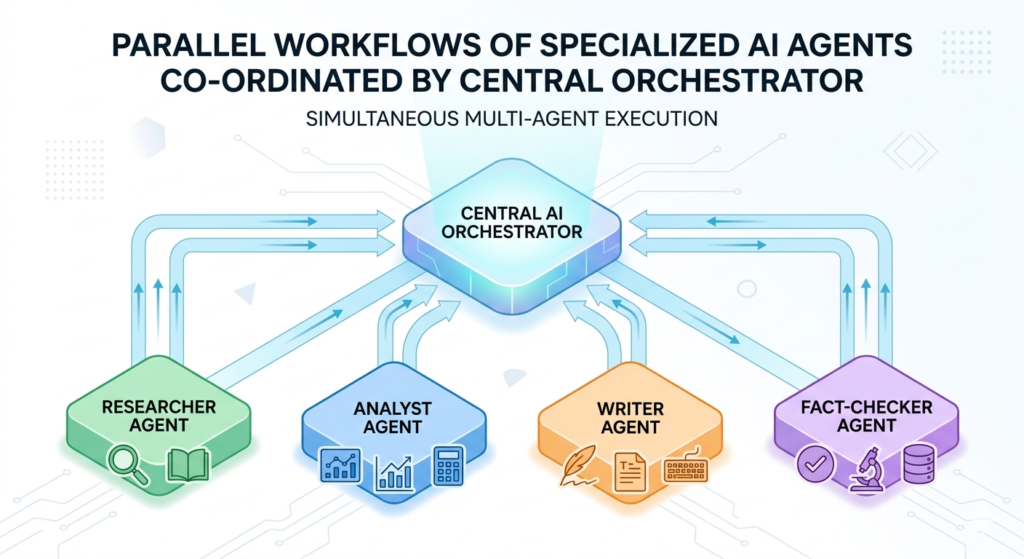
Here’s what happens under the hood:
- Task Analysis: The orchestrator receives your complex request
- Agent Creation: It spawns specialized sub-agents (AI researcher, physics researcher, financial analyst, etc.)
- Parallel Execution: Each agent works on their assigned subtask simultaneously
- Quality Control: Fact-checker agents verify the work
- Synthesis: The orchestrator combines all results into a cohesive final output
The result? Complex tasks are completed up to 4 times faster than traditional AI models. Imagine conducting market research on 100 companies—what would take you weeks can now be done in minutes.
Technical Architecture: Power Meets Efficiency
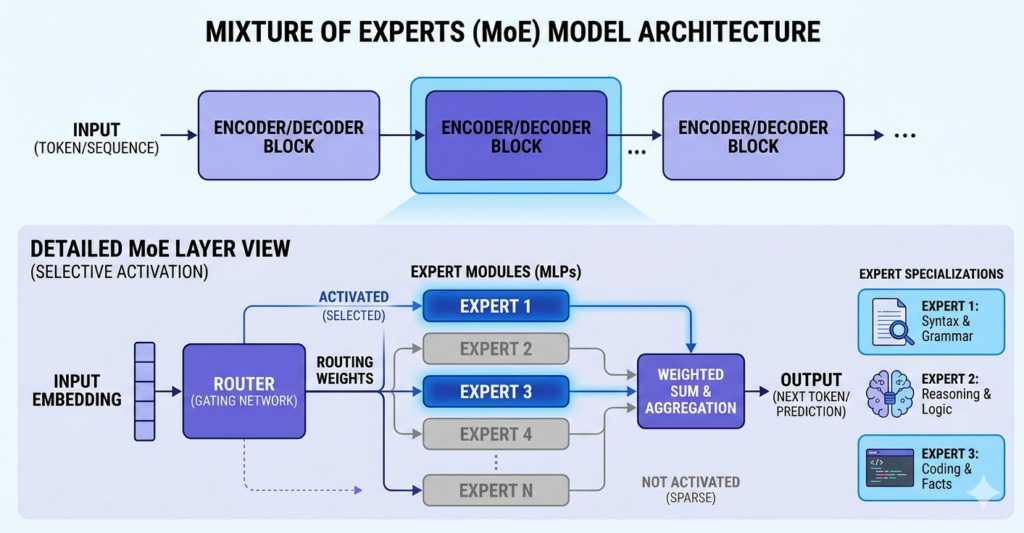
Kimi K2.5 is built on a 1 trillion parameter foundation using a Mixture of Experts (MoE) architecture. While the model has 1 trillion parameters total, only 32 billion are active at any given time. This clever design means the model is incredibly powerful yet surprisingly efficient.
The model was trained on 15 trillion tokens that include both text and images together from day one. This isn’t a text model with vision capabilities bolted on—it’s truly multimodal from its core architecture. The vision capabilities are baked in, which is why Kimi K2.5 excels at visual understanding and frontend development tasks.
Reinforcement Learning for Parallel Processing
What’s particularly innovative is how Moonshot AI rebuilt their reinforcement learning infrastructure specifically to reward parallel processing first, then quality. This prevents the model from falling into the step-by-step execution pattern that has dominated AI in 2024-2025. Instead, Kimi K2.5 is incentivized to break tasks into parallel subtasks from the start.
Pricing That Disrupts the Market
Here’s where things get really interesting. Kimi K2.5 costs:
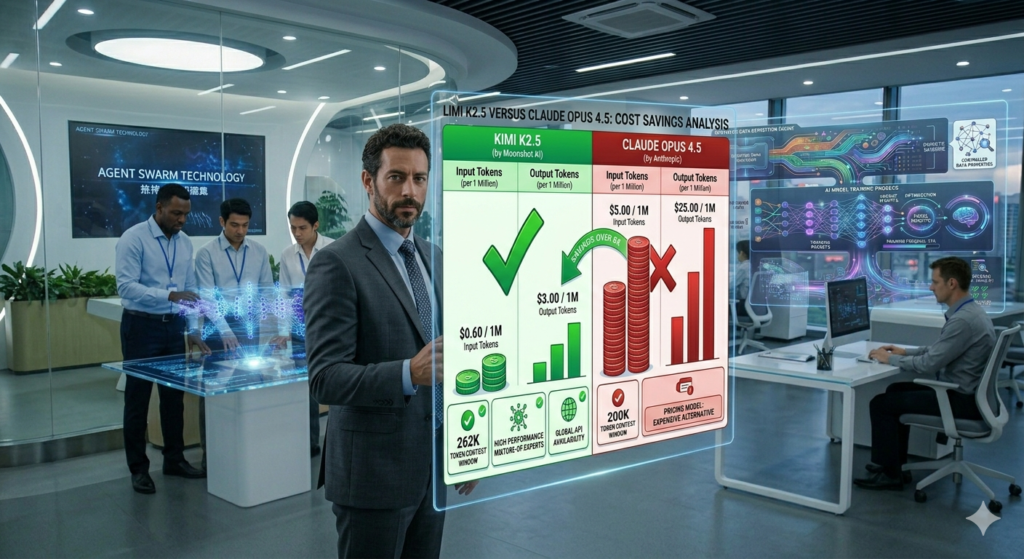
- $0.6 per million input tokens
- $3 per million output tokens
Compare this to Claude Opus 4.5:
- $5 per million input tokens
- $25 per million output tokens
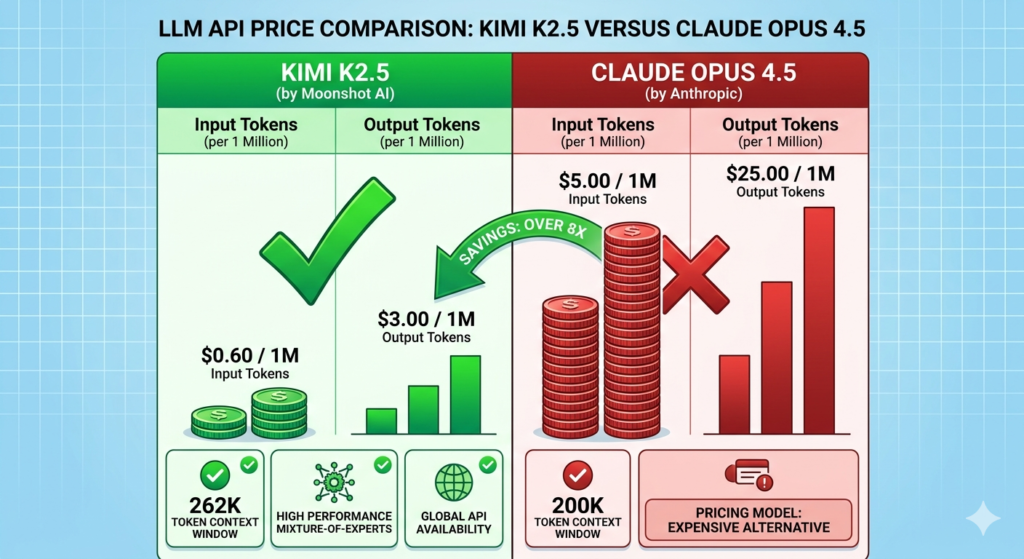
When you calculate the blended average, Kimi K2.5 is 8-10 times cheaper than Claude Opus 4.5 while delivering comparable or better performance. This isn’t just a small discount—it’s a fundamental shift in the economics of AI.
How to Use Kimi K2.5 for Free
You don’t need to pay premium prices to experience this revolutionary model. Here’s how to get started:
Option 1: Kilo Code (Free for One Week)
Kilo Code is currently offering Kimi K2.5 completely free for the next week. Here’s how to set it up:
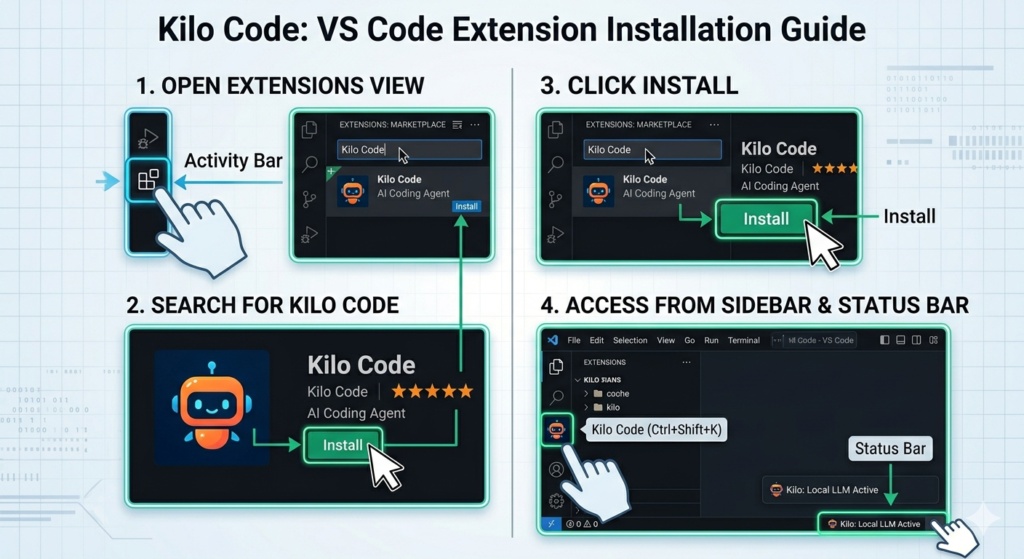
- Open VS Code
- Go to Extensions (top right)
- Search for “Kilo Code”
- Click Install and trust the publisher
- Sign up for a free account at kilocode.ai
- Select “Moonshot Kimi K2.5 Free” from the model picker
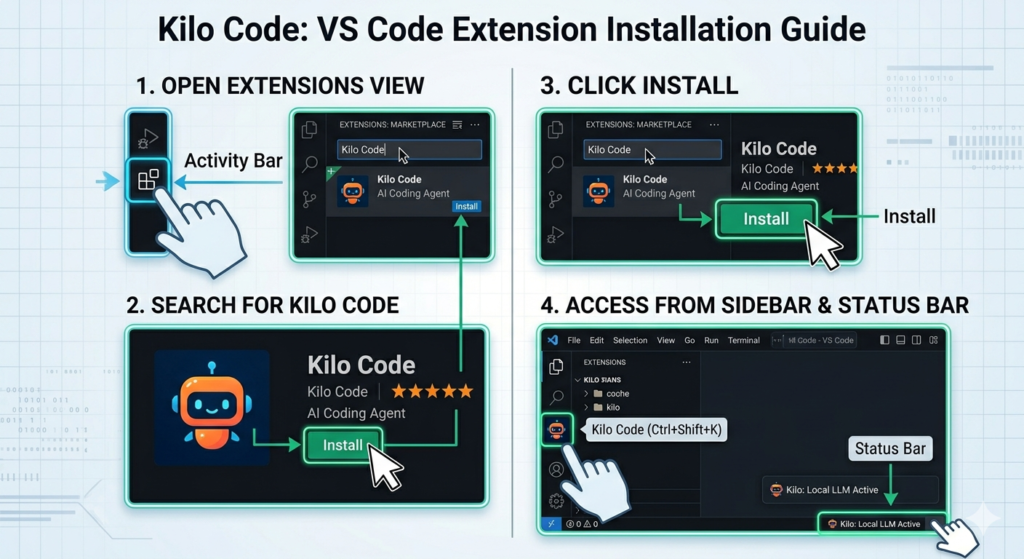
Kilo Code is consistently one of the top apps on OpenRouter, trusted by thousands of developers as their primary coding agent.
Option 2: Kimi.com Web Interface
For a more visual experience, you can use the Kimi.com web app:
- Visit kimi.com
- Create an account (Google or phone number)
- Choose between:
- K2.5 Instant: For quick answers
- K2.5 Thinking: For deep, thoughtful responses
- Agent: For task execution (research, slides, websites)
- Agent Swarm: For massive research and complex batch tasks
The Agent Swarm feature requires a paid plan (starting at $39/month), but it’s worth it for complex tasks that would normally take days or weeks.
Real-World Performance: Agent Swarm in Action
To demonstrate the power of Agent Swarm, let’s look at a practical example. When tasked with comparing the last 18 months of funding, key hires, open-source releases, and benchmark progress across six major AI companies (Moonshot AI, DeepSeek, xAI, Anthropic, OpenAI, and Meta AI), here’s what happened:
- The orchestrator created 6 specialized sub-agents, each focusing on one company
- All agents worked simultaneously, conducting searches and analysis
- Within 8 minutes, the system produced a 400-line comprehensive report
- A synthesizer agent then combined all findings into a cohesive landscape report
This task would have taken a human researcher days or even weeks to complete with the same level of detail and cross-referencing.
Kimi Code CLI: The Claude Code Competitor
Moonshot AI also offers Kimi Code CLI, a terminal-based coding assistant similar to Claude Code. Here’s how to set it up:
bash1234567891011
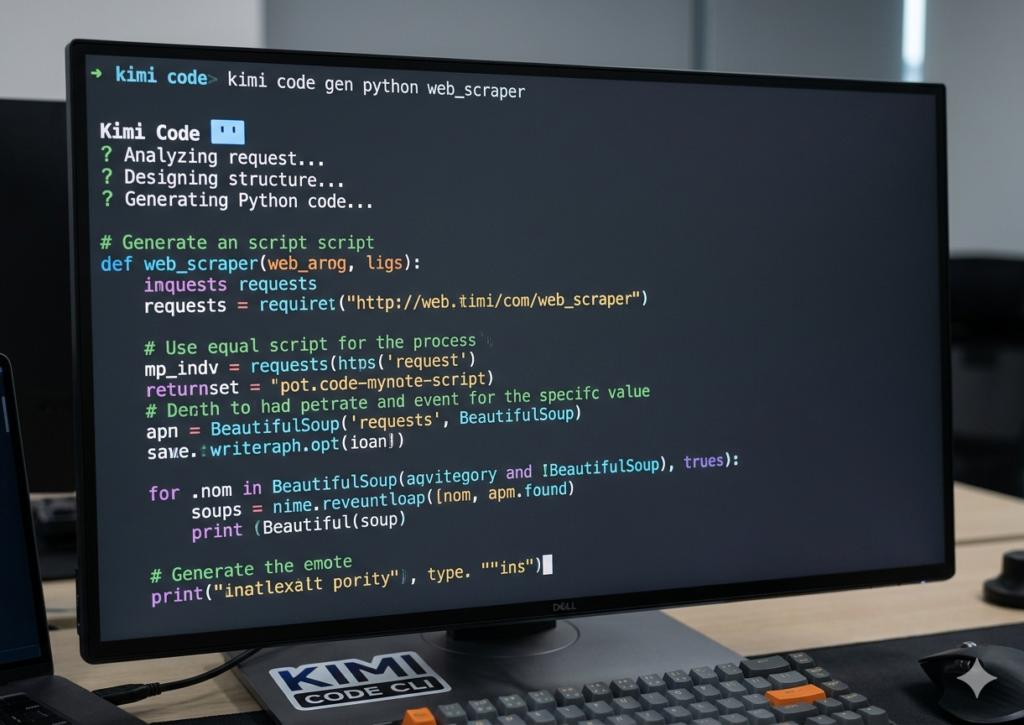
While the UI isn’t as polished as Claude Code or OpenCode, the functionality is solid. For those concerned about data privacy (since Kimi is a Chinese company), you can also access Kimi K2.5 through OpenRouter using providers like Fireworks AI or GMI Cloud, which offer faster speeds (up to 140 tokens/second) and keep your data outside of China.
Visual Coding Excellence
Kimi K2.5 absolutely dominates in visual coding and frontend development. It’s currently considered better than Gemini 2.5 Pro for frontend tasks, which was previously the gold standard.
The model can:
- Generate complete websites from image prompts
- Create immersive, animated designs
- Produce production-ready HTML/CSS/JavaScript
- Understand visual design aesthetics from reference images
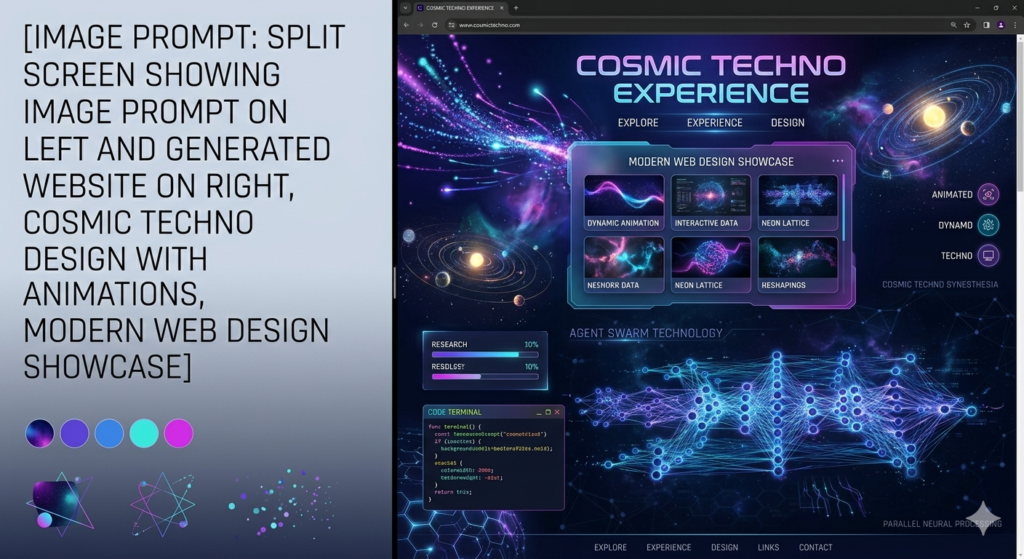
In testing, Kimi K2.5 generated a 1,500-line interactive website with animations and cosmic techno aesthetics in a single prompt—something that would have required multiple iterations with other models.
The Claude Controversy Explained
Some users have noticed that when asked “tell me about yourself,” Kimi K2.5 occasionally responds with “I’m Claude, an AI assistant from Anthropic.” This has raised concerns in the community.
There are two likely explanations:
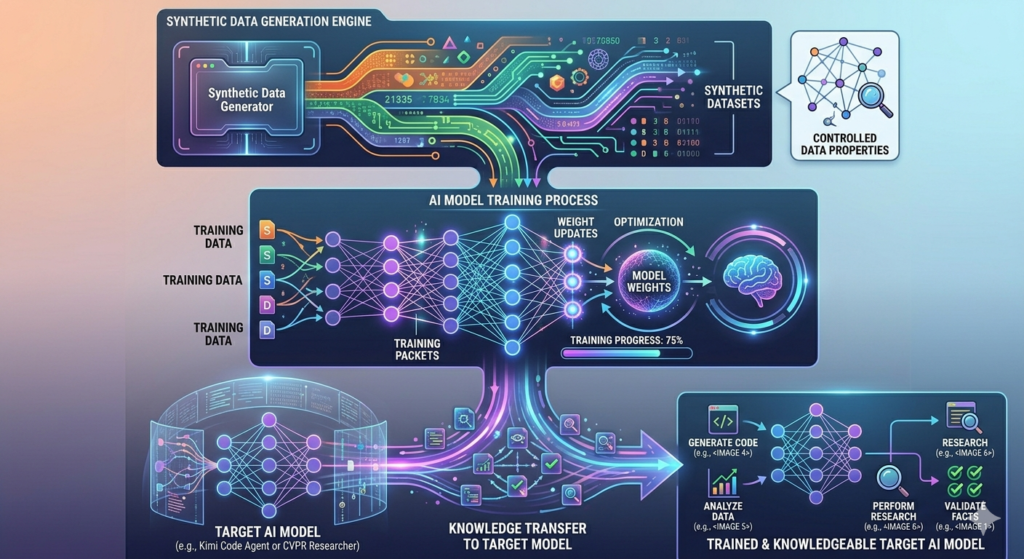
- Synthetic Data Training (Most Likely): Moonshot AI used Claude to generate synthetic training data. This is a smart strategy since Claude produces high-quality outputs, but it can cause the model to occasionally mimic Claude’s identity.
- Weight Leakage (Speculative): Some speculate that model weights from closed-source models may have leaked to China through researchers with ties to Chinese institutions. However, this remains unproven speculation.
Why This Matters for Developers and Businesses
If you’re still paying premium prices for closed-source models in 2026, you’re leaving money on the table. Kimi K2.5 offers:
✅ Frontier-level performance matching or exceeding Claude Opus 4.5
✅ Native multimodal capabilities (text, images, video, audio)
✅ 100-agent parallelization for complex tasks
✅ Open-source transparency (no hidden biases or propaganda)
✅ 8-10x cost reduction compared to closed alternatives
Getting Started Today
The AI landscape is evolving rapidly, and Kimi K2.5 represents a significant shift toward more powerful, affordable, and transparent AI systems. Whether you’re a developer looking for a better coding assistant, a researcher needing to process massive amounts of data, or a business looking to reduce AI costs, Kimi K2.5 deserves your attention.
Take action now:
- Sign up for Kilo Code to use Kimi K2.5 free for one week
- Experiment with the Agent Swarm feature on kimi.com
- Test Kimi Code CLI for your development workflow
- Compare results with your current AI tools
The future of AI is open-source, multimodal, and massively parallel. Kimi K2.5 is leading this revolution, and the best part is—you can start using it today without breaking the bank.

Have you tried Kimi K2.5 yet? Share your experience in the comments below and let us know how the Agent Swarm feature compares to your current AI workflow!
Leave a Reply