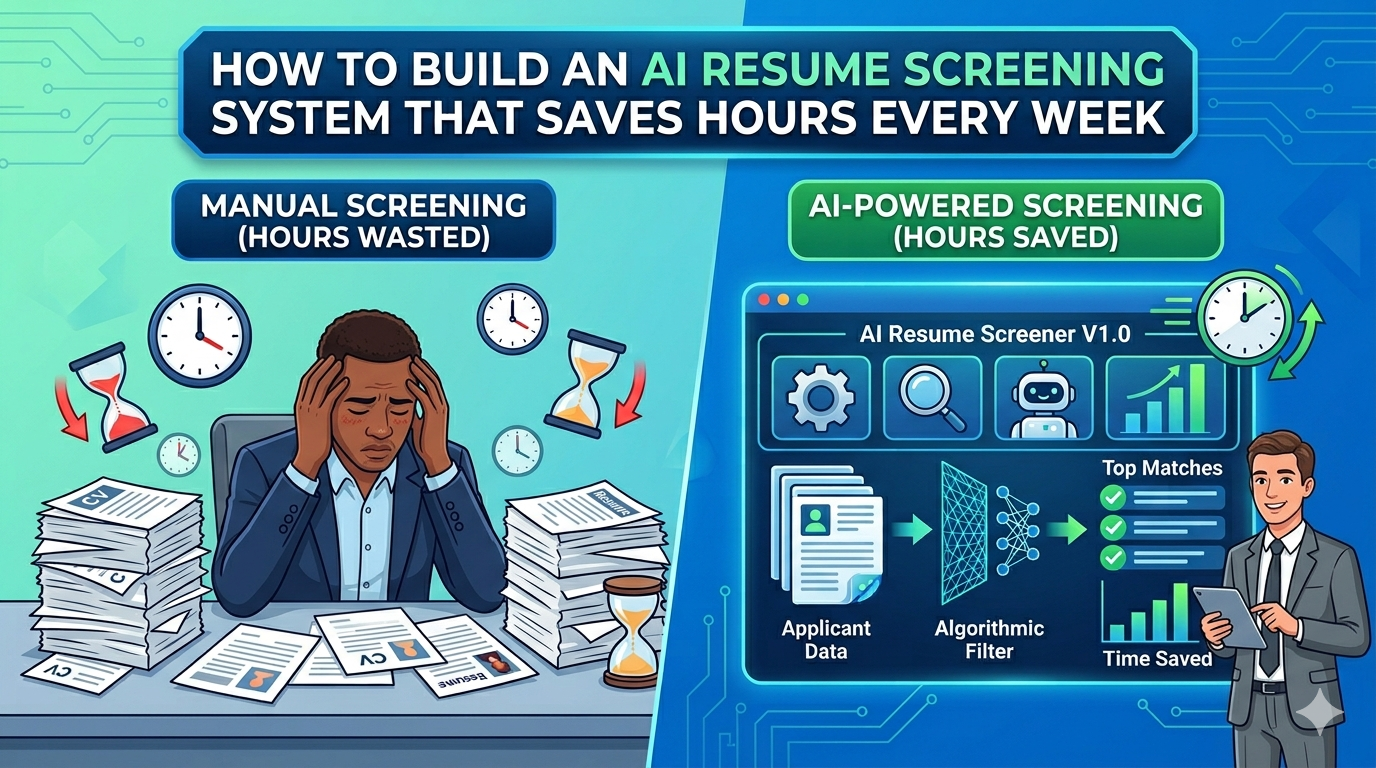
HR professionals and talent acquisition teams struggle daily with the daunting task of reviewing countless applications to identify qualified applicants. Imagine streamlining your candidate evaluation process while minimizing inherent prejudices. This is precisely where AI resume screening technology proves invaluable. These sophisticated systems evaluate applicant credentials against position requirements, generating comprehensive analyses of potential risks, benefits, and compatibility ratings—all before a recruiter manually reviews the document. Throughout this comprehensive guide, you’ll discover how to create a flexible, automated system that revolutionizes your recruitment timeline, reducing processing time from hours to mere minutes.
Understanding Intelligent Resume Evaluation Technology
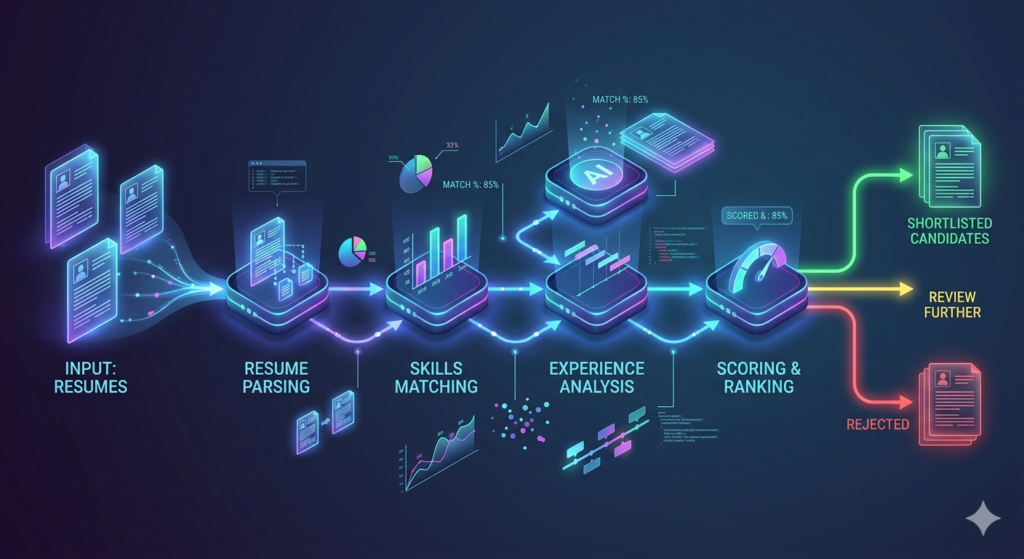
AI resume screening refers to automated platforms that parse candidate submissions, compare qualifications against role specifications, and generate structured evaluations using machine learning algorithms. Unlike traditional manual review, these intelligent systems apply uniform criteria to every application, empowering teams to:
- Reclaim valuable time previously spent on preliminary candidate filtering
- Mitigate unconscious bias by emphasizing demonstrable skills and measurable experience
- Enhance hiring outcomes through evidence-based decision frameworks
- Expand recruitment capacity without increasing operational overhead
For scaling organizations and resource-constrained HR departments, deploying an intelligent evaluation workflow represents more than convenience—it’s a competitive differentiator. By automating repetitive assessment tasks, talent professionals can redirect energy toward strategic initiatives like candidate relationship building and organizational culture alignment.
Constructing Your AI Resume Screening Architecture: A Practical Framework
Developing an effective AI resume screening solution demands deliberate system design. Below outlines a validated methodology using workflow automation platforms like n8n, which seamlessly integrates email triggers, document processing, artificial intelligence analysis, and structured data output.
Configuring Email Triggers and Attachment Management
Your workflow initiates with an event trigger—commonly a new email containing a resume attachment. Configure your automation environment to:
- Monitor a designated Gmail inbox or webhook endpoint for incoming applications
- Automatically download attachments to secure cloud storage (e.g., Google Drive)
- Capture relevant metadata including sender information and subject lines for audit trails
This foundational step guarantees consistent ingestion of every application, irrespective of submission method or file format.
Normalizing Resume Content Across Multiple File Formats
Applicants submit materials in diverse formats: PDF documents, Microsoft Word files, or plain text. Your system must process each reliably:
- Word documents: Convert to Google Docs via API integration, then extract textual content
- PDF files: Download directly and utilize specialized text extraction utilities
- Plain text files: Parse content immediately with minimal transformation overhead
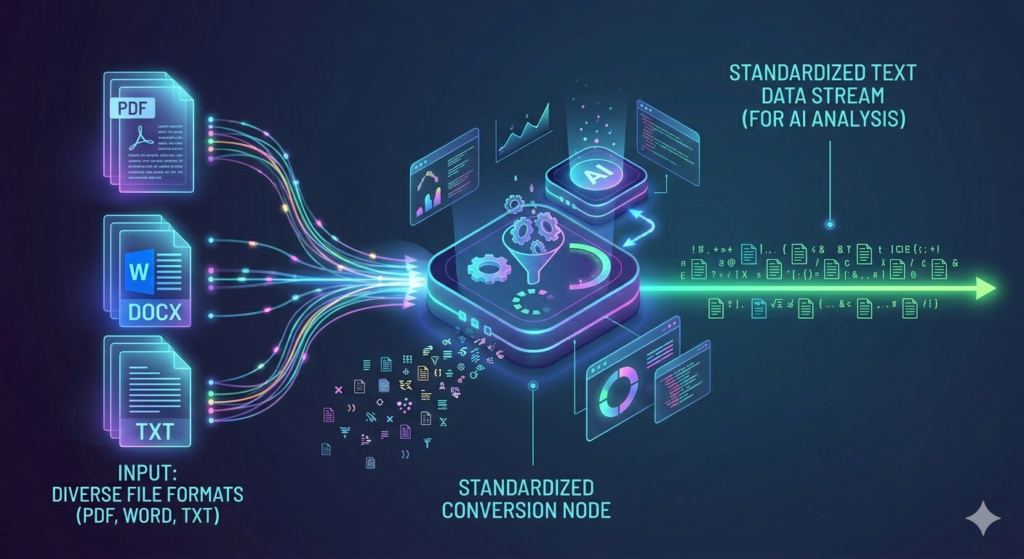
Route all extracted content into a unified field designation (e.g., resume_text). This standardization phase proves essential—subsequent AI evaluation requires clean, consistent input regardless of original source format.
Deploying AI Analysis for Comprehensive Candidate Assessment
With resume content and job specification data prepared, introduce an AI agent configured as a specialized technical recruiter. Strategic prompt engineering drives effectiveness here. Your system instructions should direct the AI to:
- Evaluate the resume against the published job description
- Identify candidate strengths and potential development areas
- Assess risk factors and opportunity potential
- Generate an overall compatibility rating (e.g., 1-10 numerical scale)
- Provide transparent justification supporting each evaluation component
Implement structured output formatting (JSON schema) to ensure results populate cleanly into your database infrastructure. This enables straightforward sorting, filtering, and analytical reporting later in the hiring pipeline.
AI automation tools – https://aitoolsupdates.net/
Refining Your AI Recruiter Agent for Superior Evaluation Quality
The caliber of your AI resume screening output depends significantly on prompt architecture and model selection. Consider these implementation best practices:
- Leverage reasoning-capable models (such as OpenAI’s o4-mini) for complex evaluation scenarios
- Define explicit output schemas to prevent unstructured text that complicates downstream parsing
- Incorporate few-shot examples within prompts to guide consistent response formatting
- Validate with diverse resume samples to identify and address potential bias or blind spots
Additionally, separate functional concerns where feasible. Dedicate one AI node to resume parsing (extracting name, contact information, core competencies) and another to evaluative analysis. This modular architecture improves system maintainability and enables independent optimization of each component.
n8n Documentation – https://docs.n8n.io
Google Drive API Guide – https://developers.google.com/drive
Scaling Your Automated Recruitment Infrastructure
Once your core AI resume screening workflow demonstrates reliability, amplify its organizational impact through these strategic enhancements:
- Implement notification triggers: Deliver Slack alerts or email summaries when high-compatibility candidates are identified
- Integrate with ATS platforms: Push evaluated candidates directly into your applicant tracking ecosystem
- Establish feedback mechanisms: Enable recruiters to rate AI suggestions, generating training data for continuous model refinement
- Customize evaluation parameters: Adjust prompts per role category (engineering versus marketing versus sales functions)
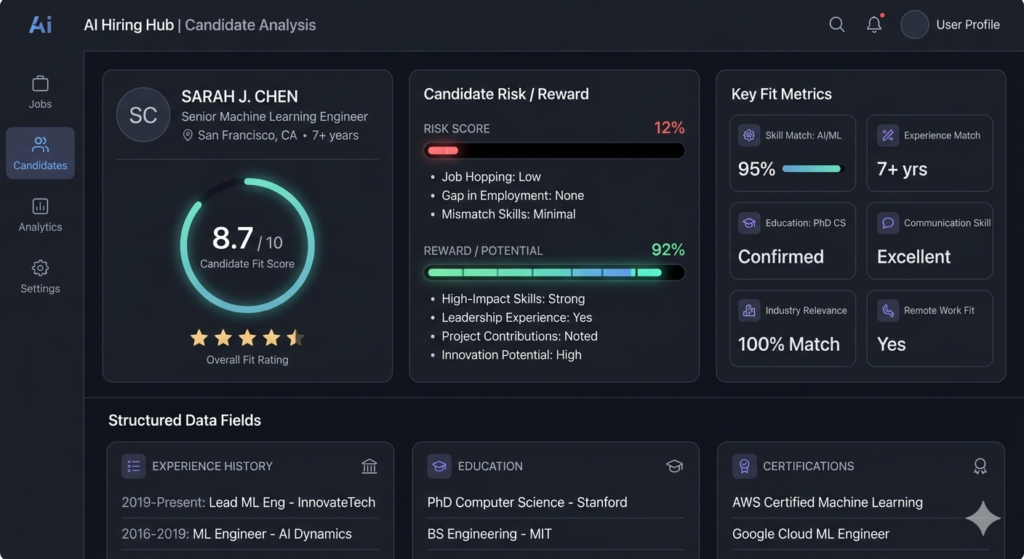
Remember: automation should augment human expertise, not supplant it. Leverage AI-generated insights to prioritize candidates for human review, rather than delegating final hiring decisions to autonomous systems.
recruitment software reviews – https://aitoolsupdates.net/
Launching Your Intelligent Screening System Today
Constructing an intelligent resume evaluation system may appear complex initially, but decomposing the project into discrete, testable components renders it achievable. Begin with a single file format and one job description template. Validate outputs collaboratively with your recruitment stakeholders. Then systematically expand to accommodate multiple formats and role types.
The initial time investment yields compounding returns: every automated screening conserves minutes that aggregate to hours weekly. More significantly, consistent, bias-aware evaluation supports building stronger, more inclusive teams.
Prepared to transform your hiring workflow? Explore our curated resources on automation platforms and AI recruitment technologies to identify the optimal stack for your organization. With the right implementation strategy, AI resume screening becomes your strategic advantage for smarter, faster, and more equitable talent acquisition.
Leave a Reply