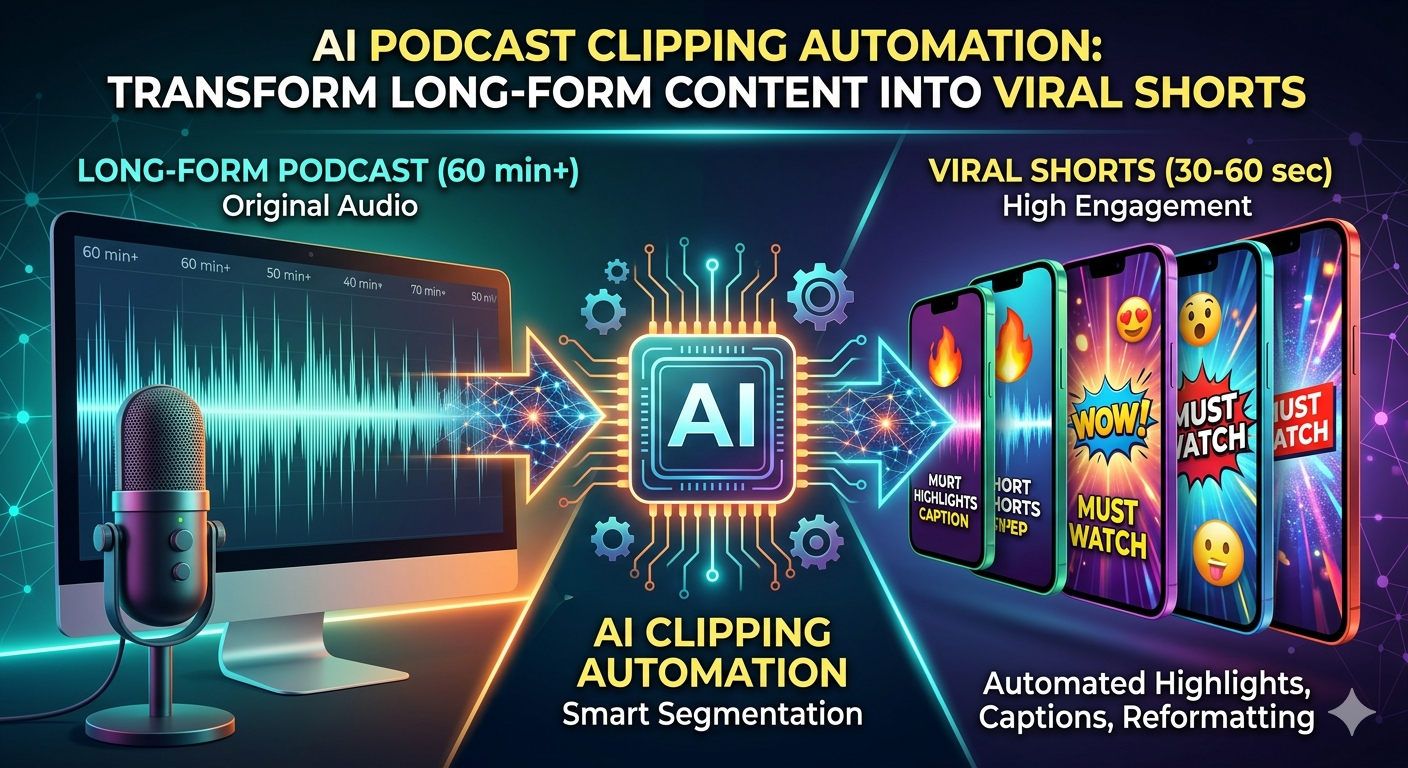
In today’s fast-paced content landscape, AI podcast clipping automation has emerged as a game-changer for creators looking to maximize their reach without multiplying their workload. This powerful approach automatically transforms long-form podcast episodes into engaging, platform-optimized short clips for TikTok, Instagram Reels, and YouTube Shorts—handling highlight extraction, caption generation, background visuals, and even scheduling. For podcasters and digital media professionals, implementing AI podcast clipping automation isn’t just convenient; it’s a strategic advantage that drives consistency, engagement, and revenue.
Why AI Podcast Clipping Automation Solves a Real Business Problem
Creating short-form content from podcasts manually is notoriously time-intensive. Editors spend hours reviewing footage, identifying compelling moments, trimming clips, adding captions, and formatting for each platform. AI podcast clipping automation eliminates this bottleneck by leveraging machine learning models to:
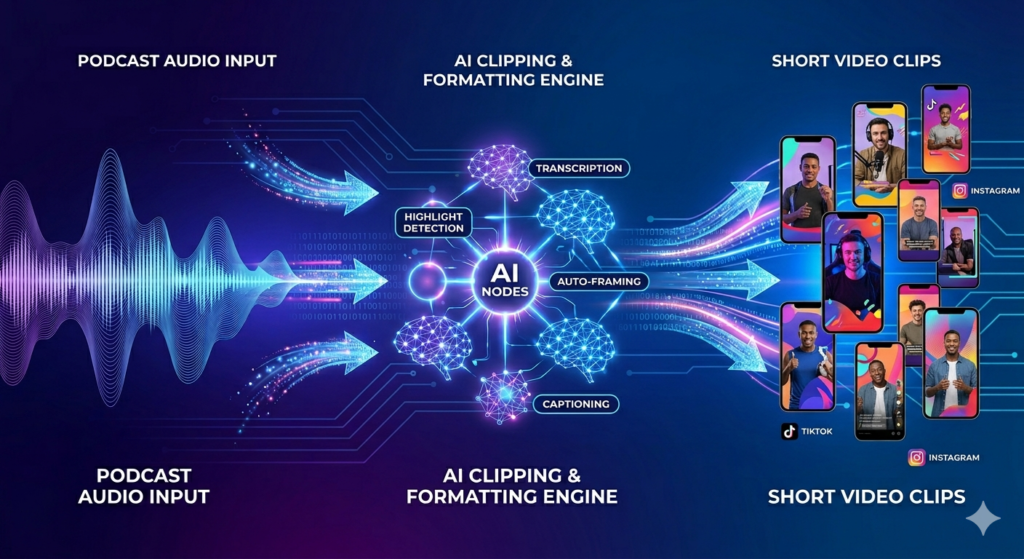
- Analyze full episodes and detect high-engagement segments using speech patterns, sentiment, and topic shifts
- Auto-generate attention-grabbing captions and titles optimized for social algorithms
- Apply dynamic background visuals and branding elements without manual editing
- Export ready-to-publish clips in platform-specific formats
The result? A single 60-minute podcast can yield 10–12 polished, high-performing shorts—ready for distribution in under 10 minutes. For agencies and freelancers, this workflow represents a premium service easily priced at $1,000–$2,000 per client setup.
Explore AI Automation Services – aitoolsupdates.net
Building Your AI Podcast Clipping Automation Workflow: Step-by-Step
Step 1: Select the Right AI Clipping API
Not all tools are created equal. When evaluating platforms for AI podcast clipping automation, prioritize APIs that support:
- Direct YouTube/RSS feed ingestion
- Webhook callbacks for asynchronous processing
- Customizable clip length and style preferences
- Transparent pricing and usage limits
Two strong contenders are Visard and Clap. Visard offers an accessible entry point at $29/month with robust API documentation and webhook support—ideal for prototyping.
Visard API Documentation – https://docs.visard.ai
Always verify authentication flows and response structures before committing to a build.
Step 2: Structure Your Data Pipeline with N8N
N8N (often mistyped as “NADN” in tutorials) serves as the orchestration layer for your AI podcast clipping automation system. A typical workflow splits into two phases:
Scrape & Send Phase:
- Use YouTube’s native RSS feed (format:
https://www.youtube.com/feeds/videos.xml?channel_id=YOUR_CHANNEL_ID) to fetch new episodes - Parse video URLs and metadata
- Submit clips to your chosen AI API via HTTP request with API key authentication
Retrieve & Generate Phase:
- Capture completed clips via webhook or polling
- Split batch responses into individual video objects
- Enrich each clip with AI-generated captions using OpenAI’s GPT-4
- Log all assets to a Google Sheet database for tracking and client delivery
N8N Workflow Templates – aitoolsupdates.net
Step 3: Enhance Outputs with AI Caption Generation
Raw clips gain significant engagement lift when paired with platform-native captions. Integrate an OpenAI node configured to:
- Accept transcript text as input
- Generate 50–100 word captions in a conversational, first-person tone
- Output structured JSON for easy database mapping
- Apply brand voice guidelines (e.g., “Spartan tone, emoji-sparing, university reading level”)
This step ensures your AI podcast clipping automation system delivers not just video, but complete, publish-ready content packages.
Overcoming Common Implementation Challenges
Even with powerful tools, builders encounter predictable hurdles:
- Webhook Timeouts: N8N’s test environment may timeout before AI processing completes. Solution: Implement polling logic or use production webhook URLs with proper endpoint configuration.
- Rate Limiting: Bulk-inserting 30+ clips into Google Sheets can trigger API limits. Solution: Use N8N’s “Loop Over Items” node with a 2-second delay between iterations.
- Visual Quality: Screen-share heavy podcasts may produce pixelated face crops. Advanced fix: Add a Gemini vision analysis step to filter clips based on visual composition before export.
Documenting these detours isn’t just instructive—it builds trust with clients who value transparency over “magic button” promises.
Monetizing Your AI Podcast Clipping Automation Service
Once your workflow is stable, packaging it for sale is straightforward:
- Productize the Setup: Offer a one-time $1,000–$2,000 implementation fee covering API configuration, N8N workflow deployment, and client training.
- Add Retainer Options: Charge $200–$500/month for ongoing maintenance, clip performance reporting, and strategy tweaks.
- White-Label for Agencies: License your system to marketing firms serving podcast clients, creating scalable B2B revenue.
Podcasters immediately recognize the value: consistent short-form presence without hiring editors or learning complex tools. Your system gets them 90% of the way to publication-ready content—freeing them to focus on creation, not clipping.
Social Media Examiner – Short-Form Video Strategy Guide – https://www.socialmediaexaminer.com/short-form-video-strategy
Get Started With AI Podcast Clipping Automation Today
The barrier to entry has never been lower. With free tiers on N8N Cloud, affordable AI APIs, and comprehensive documentation, you can prototype a production-ready AI podcast clipping automation system in a single afternoon. The real differentiator isn’t technical skill—it’s taking action.
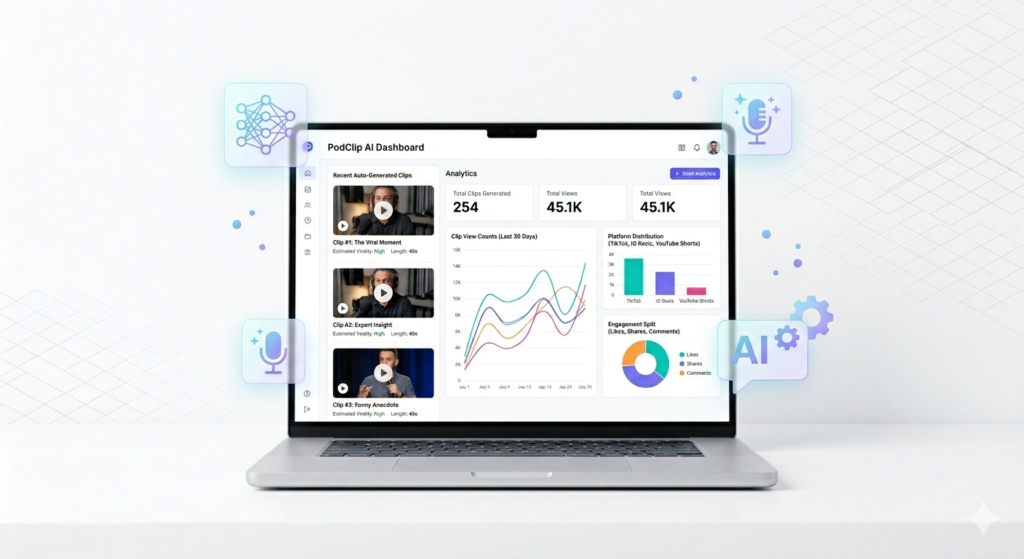
Ready to deploy your own system? We’ve packaged the complete N8N workflow, setup checklist, and client onboarding template as a free download. [Internal Link: Download Free AI Workflow – aitoolsupdates.net/free-ai-tools] Start offering AI podcast clipping automation to creators in your network—and turn content repurposing from a chore into your most profitable service line.
Leave a Reply