In the rapidly evolving world of AI-powered development tools, few stories are as remarkable as Windsurf’s journey. What started as a GPU virtualization company transformed into one of the most innovative AI coding platforms, challenging industry giants like GitHub Copilot and Cursor. In this deep dive, we explore the strategic pivots, technical breakthroughs, and bold visions that are reshaping how software gets built.
The $28 Million Pivot: When Everything Changed Overnight
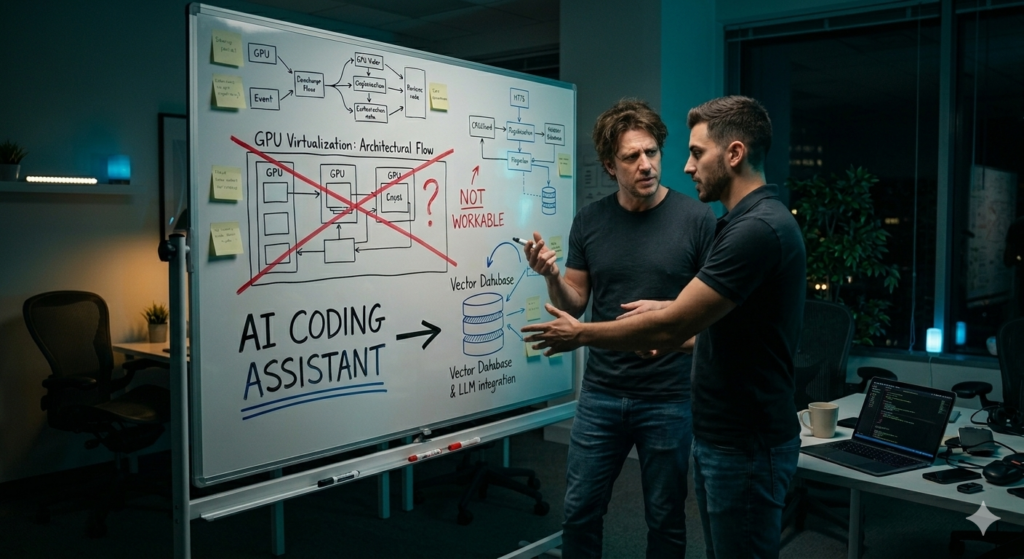
Most companies would kill for a couple million in revenue and $28 million in funding. But in mid-2022, Windsurf’s founding team faced an existential crisis. They were running a successful GPU virtualization company called Exofunction, managing over 10,000 GPUs for autonomous vehicle companies. Revenue was growing. They had just raised their Series A. Everything looked perfect.
Then they saw the writing on the wall.
The transformer architecture was taking over. Models like text-davinci from OpenAI were demonstrating that a single model architecture could handle tasks that previously required custom deep learning pipelines. The founders realized their entire business hypothesis was wrong.
“We felt that everyone was going to run these transformer-type models,” explains the CEO. “In a world where everyone’s going to do the same thing, what is our alpha going to be? We would get commoditized.”
Over a single weekend, the eight-person team made a bet-the-company decision: abandon their successful GPU business and pivot to AI coding tools. On Monday, they told the company. By Tuesday, everyone was working on what would become Codeium.
This wasn’t just a minor adjustment—it was a complete reinvention. And it reveals a critical lesson for every startup: every insight is a depreciating asset.
The Irrational Optimism That Beat GitHub Copilot
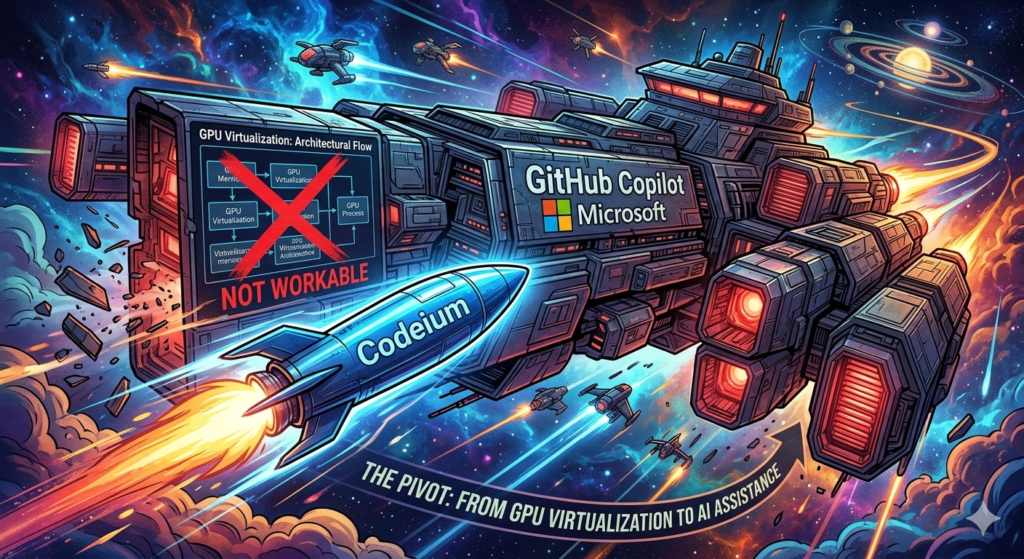
When Codeium launched, GitHub Copilot seemed unstoppable. It had Microsoft’s distribution, GitHub’s integration, OpenAI’s models, and seemingly insurmountable advantages. The odds were stacked against a tiny eight-person team.
“We were early adopters of GitHub Copilot,” the CEO recalls. “We thought that was the tip of the iceberg on where the technology could go.”
The first version of Codeium was objectively worse than Copilot. The only difference? It was free. But within two months, something remarkable happened. The team trained their own models specifically optimized for “fill-in-the-middle” code completion—predicting code that goes between existing lines, not just at the end.
This capability was crucial. When developers write code, they’re often inserting logic between existing functions or modifying incomplete sections. Standard language models trained on complete code samples struggled with this. Codeium’s specialized training changed the game.
“By the beginning of 2023, our autocomplete capabilities were much better than what Copilot had,” he says.
The secret wasn’t just better models—it was uncompromising realism paired with irrational optimism. Startups need both: the optimism to attempt the impossible, and the realism to pivot when facts change.
Enterprise Success: JP Morgan, Dell, and the Power of Multi-IDE Support
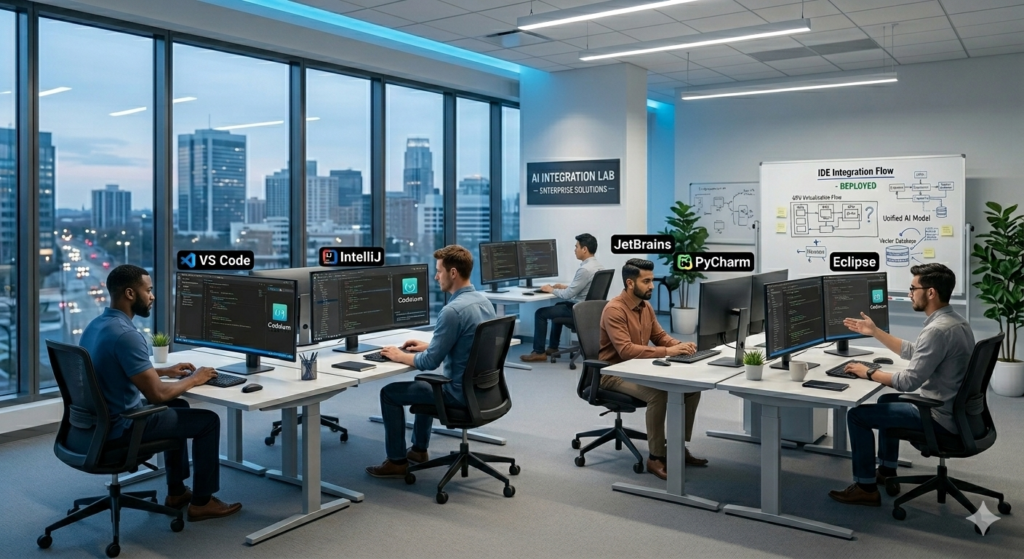
While individual developers flocked to the free product, something unexpected happened: enterprises started calling. JP Morgan Chase. Dell. Fortune 500 companies with codebases exceeding 100 million lines of code.
These weren’t just looking for a Copilot alternative. They needed:
- Security: On-premise deployment options
- Personalization: Models trained on their private codebases
- Multi-language support: Java developers using IntelliJ, Python developers using VS Code, C++ developers using CLion
This is where Codeium made a counterintuitive decision. Instead of focusing solely on VS Code (the most popular editor), they built extensions for every major IDE simultaneously.
“Companies have developers that write in many languages,” he explains. “JP Morgan might have over half their developers writing in Java, and those developers use IntelliJ. We would need to turn away a lot of companies if we only supported VS Code.”
This early architectural decision—building shared infrastructure that works across editors—became a massive competitive advantage. While competitors focused on single-editor experiences, Codeium became the enterprise standard.
From Codeium to Windsurf: The Agentic Editor Revolution
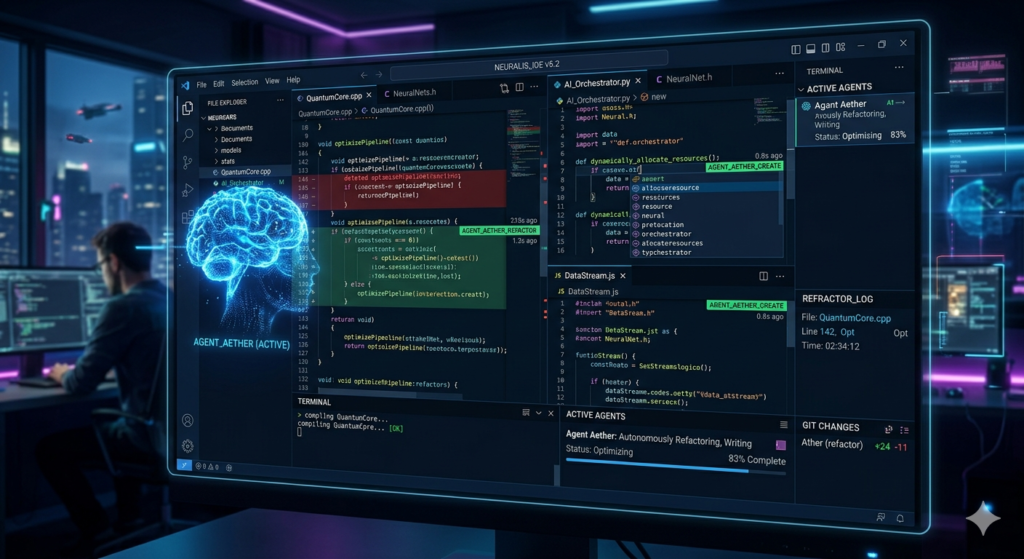
By mid-2023, Codeium was generating eight-figure revenue from enterprise customers. The product was working. But the team saw something bigger coming: AI agents.
They had been prototyping agent capabilities since early 2023, but the models weren’t ready. Then came GPT-3.5 and later models that could actually call tools efficiently. The team realized that chat-based interfaces and simple autocomplete were limiting the technology’s potential.
“Developers would spend more time reviewing software that the AI put out than actually writing it,” he says. “We weren’t able to provide a good enough experience in VS Code.”
So they made another bold move: build their own IDE.
In less than three months, with an engineering team of fewer than 25 people, they forked VS Code and created Windsurf. This wasn’t just a rebrand—it was a fundamental reimagining of the developer experience around agentic workflows.
Windsurf became the first agentic editor, where AI doesn’t just suggest code but actively understands intent, navigates massive codebases, and makes coordinated changes across multiple files.
Beyond RAG: The Technical Architecture That Powers Windsurf
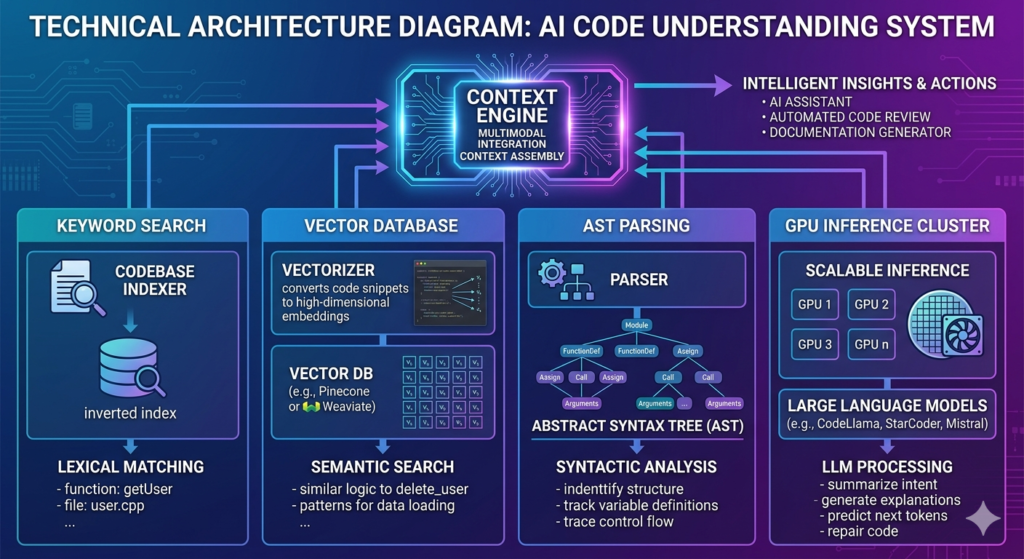
When Retrieval-Augmented Generation (RAG) became the standard approach for AI coding tools, Windsurf took a different path. While competitors relied heavily on vector databases, Windsurf built a multi-layered system:
- Keyword search for exact matches
- Vector embeddings for semantic similarity
- Abstract Syntax Tree (AST) parsing for code structure understanding
- Real-time GPU-powered ranking of context relevance
“We found that using a series of technologies together is the best way to find the best context for the user,” he explains.
Consider a simple request: “Upgrade all versions of this API to the new version.” A vector search might find five instances. But what if there are ten? Windsurf’s system ensures high precision and recall by combining multiple techniques.
This complexity wasn’t added for its own sake. It emerged from rigorous evaluation systems. The team built sophisticated evals that test:
- Retrieval accuracy: Did we find the right code?
- Intent understanding: Do we know what the developer wants?
- Test passing: Does the generated code actually work?
“We don’t strive for complexity. We strive for what works,” he says. “But we built really good evaluation systems, and those showed us we needed this complexity.”
Vibe Coding: When Non-Developers Become Builders
Image Generation Prompt: “Diverse group of non-technical professionals – marketers, designers, product managers – happily using AI coding tools on their laptops in a modern co-working space, bright natural lighting, collaborative atmosphere, inclusive tech empowerment”
One of the most surprising discoveries? A significant portion of Windsurf users have never written code before.
“We were shocked,” he admits. “We have users who just live in Cascade (our agent interface). They use the browser preview, click on things, and make changes without ever opening the actual code editor.”
This is the promise of “vibe coding”—using natural language and intent to build software without deep technical knowledge. A partnerships lead at Windsurf, with no programming background, has replaced multiple sales tools by building custom applications.
“The amount of leverage that person has is ridiculous,” he says. “Instead of waiting for engineers to build tools, domain experts can now build what they need themselves.”
This doesn’t mean developers are obsolete. It means the definition of “developer” is expanding. The future isn’t just about professional coders—it’s about builders.
“Everyone is going to be a builder,” he predicts. “Software is going to be this very democratized thing. People will build custom applications for their specific needs without knowing they’re building software.”
Hiring Engineers When AI Can Code: The New Interview Paradigm
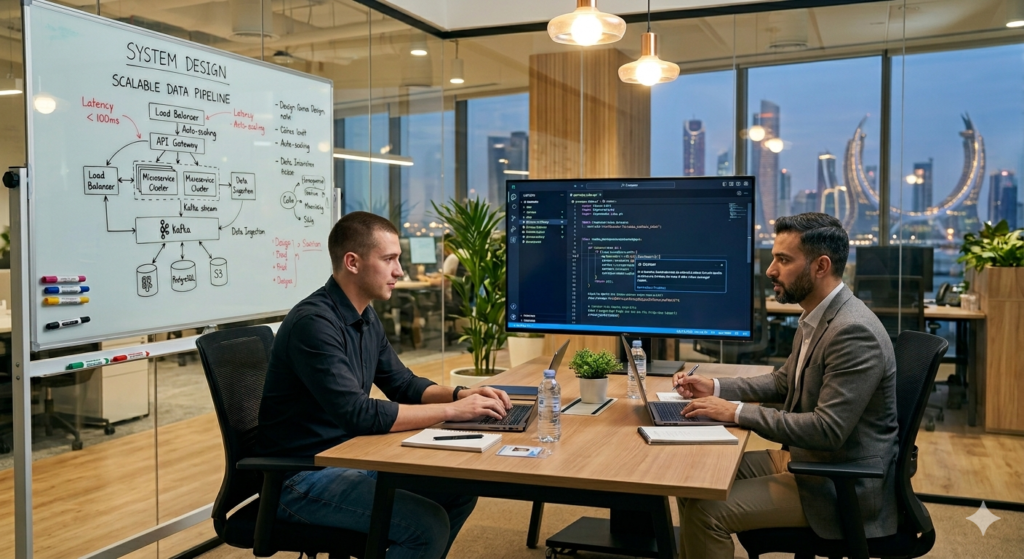
If AI can write code, how do you hire engineers? This is the paradox facing every tech company in 2024.
Windsurf’s approach is revealing. They’ve maintained a high technical bar, but the interviews have evolved:
- AI-allowed interviews: Candidates use Windsurf to solve problems. This tests whether they can effectively leverage AI tools—a critical skill.
- No-AI problem-solving: On-site interviews without AI assistance to validate fundamental problem-solving skills.
- Open-ended system design: Questions without single correct answers, testing how candidates think about trade-offs.
“The reason we still test without AI is that it’s a good proxy for problem-solving skills,” he explains. “If someone needs to go to ChatGPT to write a nested for loop, that’s concerning.”
But here’s the counterintuitive part: Windsurf is hiring more engineers, not fewer.
“The ceiling of where the technology can go is so high,” he says. “Our mission is to reduce the time it takes to build technology by 99%. That’s a Herculean task. We’ve cut off maybe 40-50 units of time, but there’s so much more to do.”
AI hasn’t eliminated the need for engineers—it’s raised the ceiling on what’s possible. Engineers now spend less time on boilerplate and more time on high-leverage hypothesis testing and innovation.
The Depreciating Insight: Why Continuous Innovation Is the Only Moat
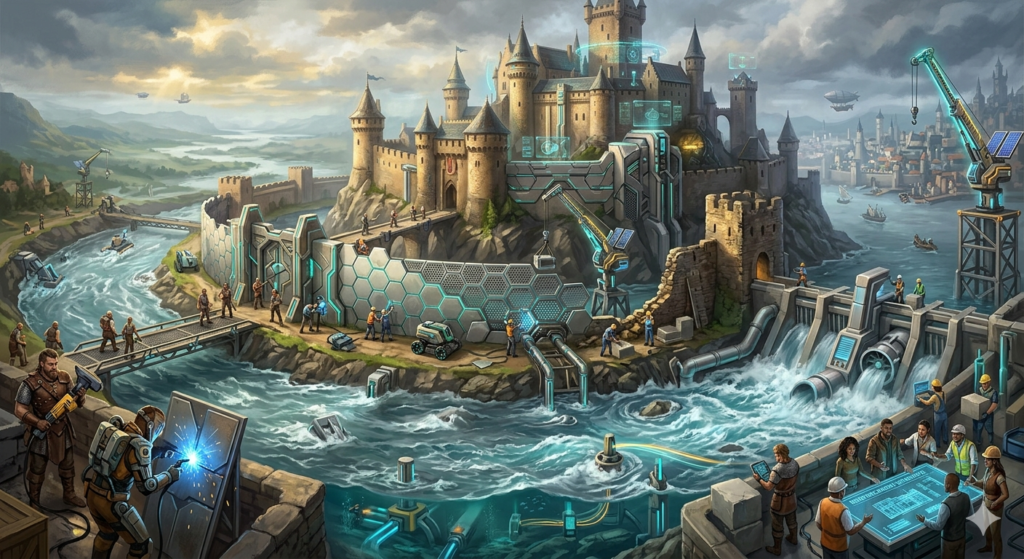
Perhaps the most profound insight from the conversation is this: every insight depreciates.
“You look at a company like Nvidia,” he says. “If Nvidia doesn’t innovate in the next two years, AMD will be on their case. They won’t be able to make 60-70% gross margins anymore.”
This applies to startups too. The fact that Windsurf built better autocomplete than Copilot in 2023 doesn’t matter today. What matters is what they’re building now.
“I’m completely okay with a lot of our insights being wrong,” he admits. “If we don’t continually have insights that we’re executing on, we’re just slowly dying.”
This is the startup paradox: you need irrational optimism to attempt the impossible, but uncompromising realism to change direction when facts change. Most founders struggle with one or the other. The best master both.
The Future: Specialized AI Tools and the $10 Billion Migration Opportunity
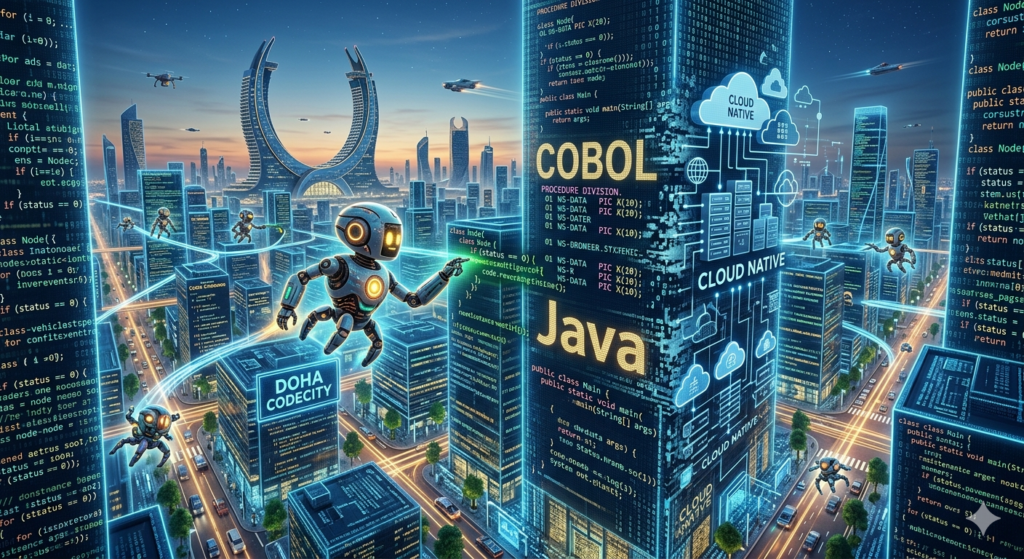
When asked about opportunities for new startups in the AI coding space, the answer is revealing: specialization.
“I’ve not seen a lot of startups that just do one thing really well,” he says. “For example, Java migrations. Companies spend billions—maybe tens of billions—every year on migrations.”
Consider COBOL-to-Java migrations. The IRS tried to migrate in the early 2000s—a $5+ billion project that failed. Most Fortune 500 companies still run critical systems on decades-old code.
“Imagine if you could do those tasks very well,” he says. “It’s such an economically valuable problem.”
Other opportunities:
- Automated bug resolution: Systems that automatically fix alerts and incidents
- Specialized refactoring: Tools for specific frameworks or languages
- Testing automation: AI that writes comprehensive test suites
The key insight? Don’t build another general-purpose coding assistant. Find a specific, valuable problem and solve it better than anyone else.
Lessons for Founders: Change Your Mind Faster Than Seems Reasonable

As the interview concludes, one piece of advice stands out for founders everywhere:
“Change your mind much faster than you believe is reasonable.”
It’s easy to fall in love with your original idea. It’s hard to admit you’re wrong. It’s terrifying to pivot when you have revenue, funding, and momentum.
But the alternative is worse: slowly dying while executing on a depreciated insight.
“Treat pivots as a badge of honor,” he says. “Most people don’t have the courage to change their mind. They’d rather fail doing what they told everyone they were doing than take a bold step and succeed.”
Windsurf’s story—from GPU virtualization to Codeium to Windsurf—proves that the willingness to change, combined with technical excellence and relentless execution, can build category-defining companies.
The Bottom Line
The future of software development isn’t about AI replacing developers. It’s about democratizing the ability to build. It’s about tools that understand intent, navigate complexity, and amplify human creativity. It’s about recognizing that every advantage is temporary, and continuous innovation is the only sustainable moat.
As Windsurf continues to push the boundaries of what’s possible, one thing is clear: the next chapter of software development is being written now, and it’s more accessible, more powerful, and more exciting than ever before.
The question isn’t whether AI will transform coding. It’s whether you’ll be building with it or watching from the sidelines.
Leave a Reply